What is Risk Management in Financial Planning?
Key Takeaways
- Risk management is about preparation, not prediction. You can’t control everything, but you can plan for what might go wrong.
- It helps protect your financial goals. Whether you're saving, investing, or planning for retirement, risk management keeps you on track when life takes a turn.
- The core steps include identifying, assessing, controlling, and reviewing risks.
- Common tools include insurance, diversification, emergency savings, and legal planning. These tools help reduce financial stress when unexpected events happen.
- Risk is normal, managing it gives you control. Instead of avoiding risk, a good plan helps you move forward with confidence.
What is Risk Management in Financial Planning?
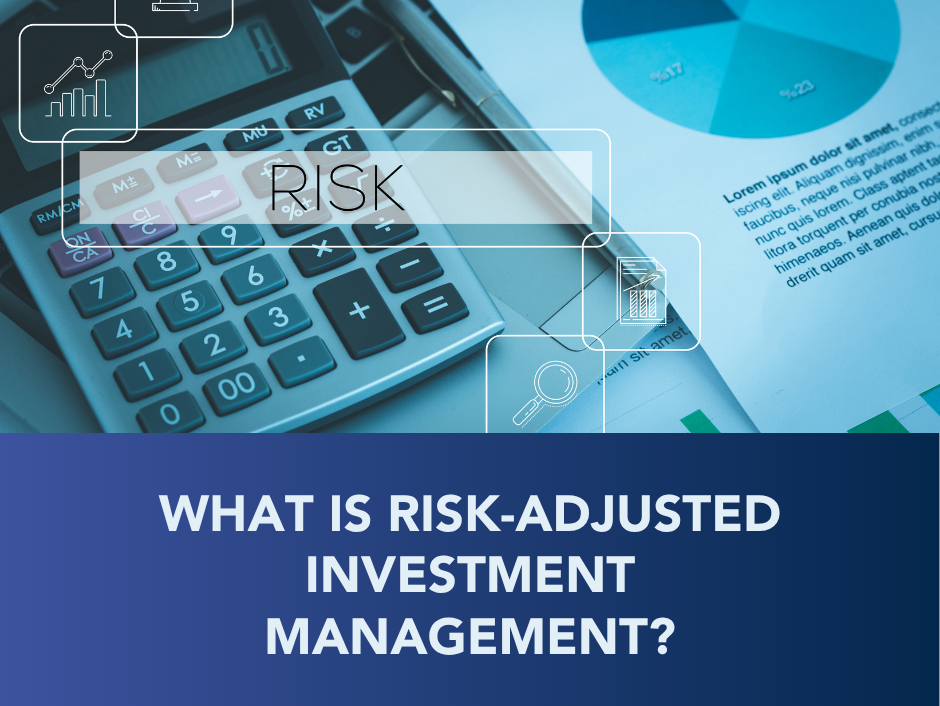
Risk management in financial planning is the process of identifying, assessing, and taking steps to reduce the impact of potential financial losses. It helps people plan for events that could hurt their finances, like a market drop, unexpected medical bills, or even losing a job. The main goal is to protect your money and make sure your financial plan stays on track, even when things don’t go as expected.
Some common types of financial risk include:
- Market risk – when your investments lose value because of changes in the stock market
- Inflation risk – when your money loses buying power over time
- Liquidity risk – when you can’t access your money quickly when you need it
- Liability risk – when you face legal or financial responsibility for something, like an accident or business issue
- Longevity risk – when you outlive your savings in retirement
By creating a structured plan to manage these risks, people can feel more confident about the future. Planning ahead helps lower the chance of a big financial shock and gives you options when unexpected things happen. A strong risk management plan is not about avoiding all risk, it’s about being ready for it.
Different professionals help manage financial risk as part of a larger financial planning process. A financial analyst usually focuses on numbers, trends, and investment performance. Their job is to look at the data and make forecasts. A financial planner or risk manager, on the other hand, looks at your full financial picture. They help build plans that protect your money, lower risk, and keep your goals within reach.
The Four Components of a Risk Management Plan
A strong risk management plan is built around four key components. Each part plays a different role in protecting your financial future. Below is a breakdown that shows both the purpose of each step (Objective) and how it’s actually done (Process):
| Component | Objective | Process |
|---|---|---|
| 1. Risk Identification | Spot possible risks that could impact your finances | Review your income, health, lifestyle, and investments to find threats (e.g., job loss, illness, market downturn) |
| 2. Risk Assessment | Understand how serious each risk is and how likely it is to happen | Rate each risk by likelihood and potential financial impact; focus on what matters most |
| 3. Risk Mitigation | Take steps to reduce or manage risk | Use tools like insurance, savings, or diversification; decide whether to avoid, reduce, transfer, or accept each risk |
| 4. Risk Monitoring | Keep the risk plan up to date as life and finances change | Review your plan regularly (at least yearly); adjust for changes in goals, income, or the economy |
Each of these parts builds on the one before it. Together, they help create a plan that not only protects your finances but also adapts as your needs grow and change.
How to Write (or Create) a Risk Management Plan
A risk management plan is a clear, step-by-step document that outlines the risks you may face and how you’ll deal with them. It helps protect your financial goals from things that could go wrong, and gives you a plan to stay on track when they do.
Here’s a detailed breakdown of how to create one.
Step 1. Define Your Financial Goals
Before you manage risk, you need to know what you’re protecting. Start by identifying your financial goals. These are the things you want to achieve with your money.
Examples of financial goals:
- Buying a home
- Paying off debt
- Building an emergency fund
- Saving for retirement
- Funding college for children
- Starting or expanding a business
- Leaving an inheritance
These goals vary based on your age, lifestyle, income, and family needs. Some are short-term (within 1–3 years), others are long-term (10+ years). All of them can be affected by risk. Defining them clearly will help you match the right strategies to the right risks.
Step 2. Identify All Relevant Identify Financial Risks
Once you know your goals, the next step is to identify what could prevent you from reaching them. Think broadly. Risks include any situation that could disrupt your income, increase your costs, or damage your assets.
Types of common financial risks to consider:
- Income risks: job loss, unstable employment, reduced hours, business failure
- Health risks: injury, illness, disability, long-term care needs
- Investment risks: market downturns, inflation, interest rate changes
- Liability risks: legal issues, lawsuits, accidents, professional exposure
- Life event risks: death of a breadwinner, divorce, growing family, aging parents
- Property risks: home damage, auto accidents, theft, natural disasters
How to identify risks:
- Review your current income and expenses
- Look at your insurance coverage
- Consider your family situation
- Think about past events that caused financial stress
- Consider your age, health, and occupation
You don’t need to list every possible risk, just the ones that are most relevant to your life and goals.
Step 3. Assess the Level of Each Risk
After identifying the risks, you need to figure out which ones are the most serious. That means looking at two factors:
- How likely is it to happen?
- How much would it cost or affect your goals if it did?
You can rate each risk as:
- Low likelihood / low impact
- High likelihood / low impact
- Low likelihood / high impact
- High likelihood / high impact
Why this matters:
- Risks with high impact and high likelihood should be handled first.
- Risks with low impact and low likelihood might not need much attention right away.
- Some risks are rare but so damaging (like a major illness or death) that they’re still worth planning for.
This step helps you prioritize your efforts and avoid wasting resources on minor risks.
Step 4. Choose the Right Strategy for Each Risk
Now that you’ve listed and assessed your risks, you can choose how to deal with them. There are four basic ways to manage any risk:
| Strategy | Meaning | Examples |
|---|---|---|
| Avoid | Don’t take on the risk at all | Not investing in high-risk assets; avoiding dangerous hobbies or jobs |
| Reduce | Lower the chance or size of the risk | Improving health to avoid medical issues; installing a security system |
| Transfer | Pass the cost of the risk to someone else | Buying insurance; creating a legal trust to protect your estate |
| Transfer | Live with the risk and handle it yourself if it happens | Paying small repairs out of pocket; skipping insurance on low-value items |
How to choose:
- For large, unpredictable risks (like death or disability), transfer them through insurance.
- For controllable risks (like health issues), reduce them through lifestyle changes.
- For small risks, accept them and plan to cover them using savings.
Each risk should be matched to one or more of these strategies based on your comfort level and resources.
Step 5. Document the plan
Putting everything into writing gives you clarity and a clear path to follow. Your risk management plan doesn’t have to be complicated. A simple chart or outline works fine as long as it’s easy to understand and follow.
Your document should include:
- A list of your financial goals
- The risks that could affect those goals
- The level of each risk (low, medium, high)
- The strategy you’ll use for each risk
- The tools or actions needed (insurance, savings, legal steps, etc.)
You can use a spreadsheet, a written report, or even a simple worksheet. What matters most is that it’s organized and that you can refer back to it when needed.
Step 6: Assign Responsibility
Each part of your plan needs someone in charge. This ensures that the plan is actually followed and nothing is left unfinished.
Who might be responsible:
- You — for building savings, tracking expenses, staying insured
- A financial advisor — for reviewing investment risk and adjusting strategies
- An insurance agent — for evaluating and updating policies
- An attorney — for estate planning documents like wills or trusts
If you’re working with professionals, keep a record of who is handling what and when reviews or updates will take place.
Step 7. Review Periodically and Adjust as Life/Market Changes
A risk plan isn’t one-and-done. It should change as your life and finances do. A good habit is to review your plan once a year or whenever you hit a major life event.
Reasons to update your plan:
- Change in job or income
- Marriage, divorce, or birth of a child
- Buying or selling property
- New investments or business ventures
- Health changes
- Policy or legal changes that affect your coverage
Your plan should grow with you. Keeping it updated means your protection stays strong, and you won’t be caught off guard when life changes.
How to Calculate Risk in Financial Management
Calculating financial risk helps you understand how much uncertainty exists in your decisions, especially when it comes to investing, saving, or planning for the future. While you can’t predict everything, measuring risk gives you a better idea of what’s at stake and how much you could lose or gain.
There are many ways to look at financial risk. The method you use depends on the type of decision you’re making.
1. Basic Risk Formula (for Personal Finance Decisions)
When looking at personal financial choices (like budgeting or goal planning), risk is often based on two factors: likelihood and impact.
You can use this simple formula:
Risk Score = Likelihood × Financial Impact
| Term | Meaning |
|---|---|
| Likelihood | How likely it is that the event will happen (scale of 1 to 5) 1 = Very unlikely 2 = Unlikely 3 = Somewhat likely 4 = Likely 5 = Very likely |
| Impact | How much it would cost or affect your finances if it does happen (scale of 1 to 5) 1 = Minimal impact 2 = Small impact 3 = Moderate impact 4 = Major impact 5 = Severe impact |
| Risk Score | Helps you rank and compare which risks need more attention |
Example:
- Risk: Job loss
- Likelihood = 2 (not very likely)
- Impact = 5 (very high financial cost)
- Risk Score = 2 × 5 = 10
This risk may not be likely, but because the impact is high, it’s still worth preparing for.
2. Standard Deviation (for Investment Risk)
When looking at investment performance, standard deviation is a common way to measure how much the returns go up and down over time.
In simple terms, it tells you how spread out the investment returns are from the average (or expected) return. A higher standard deviation means the returns can vary a lot, the investment might perform very well some years and poorly in others. A lower standard deviation means the returns are more stable and closer to the average each year.
Standard Deviation = Measure of how far investment returns move from the average
| Example | What It Tells You |
|---|---|
| Investment A (Low deviation) | Steady, less risky — returns stay close to average |
| Investment B (High deviation) | More ups and downs — higher potential gain, but also more risk |
Standard deviation is helpful when comparing funds, portfolios, or strategies. Lower deviation often means lower risk, but it could also mean lower reward.
3. Value at Risk (VaR)
For more advanced or business-related risk decisions, Value at Risk (VaR) is used. It estimates how much money you could lose in a worst-case scenario over a certain time.
There are different methods to calculate VaR, but here’s the most common and easy-to-understand one:
VaR = (Portfolio Value) × (Standard Deviation of Returns) × (Z-score)
Here’s what each part means:
- Portfolio Value – The total amount you’re investing (e.g., $100,000)
- Standard Deviation – Measures how much your returns usually go up or down
- Z-score – A number that reflects the confidence level (for example:
- 1.65 = 95% confidence
- 2.33 = 99% confidence)
VaR Example:
Let’s say you have a $100,000 investment, and the standard deviation of monthly returns is 6%.
If you want a 95% confidence level, the Z-score is 1.65.
VaR = $100,000 × 6% × 1.65 = $9,900
“There is a 95% chance that this $100,000 portfolio will not lose more than $9,900 in the next month.”
VaR is more technical and usually used by institutions or advisors when managing large portfolios.
4. Use of Scenario Planning (Practical Approach)
Scenario planning is a simple, hands-on way to manage risk in personal financial planning. Instead of using formulas, you think through different “what-if” situations that could impact your finances, and plan how you would respond.
You start by asking questions like:
- What if I lose my job?
- What if the stock market drops 20%?
- What if I need to cover a large medical bill?
- What if I live 10 years longer than I planned for retirement?
For each scenario, you:
- Estimate the impact – How would this event affect your income, savings, or expenses?
- Review your current plan – Do you have enough emergency savings? Are you insured? Is your portfolio too risky?
- Adjust if needed – Make changes to reduce the damage if that event happens.
Example Scenario: Job Loss
What if I lost my job tomorrow?
- Income drops to $0
- Monthly expenses are $4,000
- Emergency savings = $12,000
In this case, you could cover 3 months of expenses without income. Based on that, you might decide to:
- Build savings to cover 6 months
- Cut non-essential expenses
- Make sure you have short-term disability insurance
Summary Table: Common Risk Calculation Methods
| Method | Use Case | What It Measures | Who Should Use It |
|---|---|---|---|
| Likelihood × Impact | Personal and goal-based risk | How serious a risk is based on chance and effect | Everyday individuals |
| Standard Deviation | Investments | How much investment returns vary from the average | Investors, advisors |
| Value at Risk (VaR) | Portfolio or business-level risk | Potential maximum loss over a specific period | Professionals, institutions |
| Scenario Planning | Broad, practical planning | Real-life impact of “what if” financial events | All financial decision-makers |
Bottom line:
You don’t need to be a math expert to calculate risk. Start with simple scoring systems and what-if scenarios to understand your exposure. If you’re investing or managing larger assets, tools like standard deviation or VaR may give you deeper insights. The more you understand the numbers behind risk, the more prepared you’ll be to make confident decisions.
Final Thoughts
Risk is a normal part of life and finances. But without a plan, even small risks can turn into big setbacks. That’s why risk management is a key part of any solid financial plan. It helps you prepare for the unexpected, protect what you’ve built, and keep moving toward your goals with more confidence.
If you’re unsure how prepared you are or want a second look at your current plan, working with a financial planner can help you see the full picture. At Boyce & Associates Wealth Consulting, we help people across the U.S. build
personalized financial plans that include smart, practical risk management strategies.