What Are Trusts & Do I Need One?

Jonathan McQuade • July 26, 2024

Trusts are a common estate planning tool drafted by estate planning attorneys to achieve a wide variety of objectives including asset protection, legacy goals, privacy, special needs planning, and navigating complex family dynamics to name a few. As such, trusts are created in many different types with specific legal provisions that specify exactly how and when assets pass to the beneficiaries. Important to note, not all types of trusts will achieve all of the objectives making it important to select the correct type of trust. To help develop a primer on trusts, we will cover some of the basic trust lingo and common types of trusts in this article.


So, what is  a trust? A trust is a legal entity created by an attorney that arranges for a fiduciary, called a trustee, to hold assets on behalf of the grantor for a beneficiary or multiple beneficiaries.


Let’s define some important trust terms:


Probate : the legal process occurring when a person dies that involves validation and administration of their will, or if no will was created, distribution of the estate according to state law.

  • Property in trust typically avoids probate which can be expensive and time consuming in some states.

Trustee :  a person or firm with a fiduciary responsibility that holds title to property or assets for the trust beneficiaries.

  • A grantor can name themselves as trustee for some types of trust. For other types of trusts, an independent trustee is more appropriate or, in some cases, required.

Grantor : the individual or entity that creates a trust.

  • If you own the property that goes into the trust, you and/or your spouse are the Grantor(s).

Beneficiary :  the individual or entity who receives the assets within trust.

  • There are many ways to structure how, when and who receives assets in trust. It could include children from prior marriages or charitable organizations. 

Revocable :  A type of trust that allows the grantor to retain control of the assets in trust during their lifetime. After the grantor’s death, the trust becomes irrevocable, and if properly funded, can act as a will substitute.

  • Important Note! Since the grantor still has control over assets and can use them for his/her benefit during their lifetime, assets in a revocable trust will be included in your taxable estate. Also, assets must be retitled into the name of the revocable trusts!

Irrevocable :  A type of trust that typically transfers assets out of your (the grantor’s) estate. 

  • The idea behind irrevocable trusts is that it removes assets from the grantor’s estate; therefore it is not included in estate taxes and is protected against creditors. However, in exchange the grantor loses control over the assets and cannot change the terms of the trust. A grantor cannot be trustee of their own irrevocable trust.

Testamentary Trust : Outlined in a will and created through the will after death.

  • This trust is not actually created and funded until the death of the grantor. Therefore, assets may still be subject to probate and transfer taxes.

Inter Vivos (also called “Living”) Trust : Created and funded during the life of the grantor.

  • This trust can be revocable or irrevocable, depending on the grantor’s objectives. There is typically a lookback period for irrevocable trusts funded shortly before death (as to avoid transfer taxes).


Now that you have some basic trust language in your vocabulary, it’s time to look at a few basic types of trusts and why you might want to consider one. Ultimately, you will want to consult with an estate planning attorney prior to deciding if a trust is appropriate and which type of trust suits your objectives.


Below is a list of common types of trusts:


Marital (also known as “A”) Trust*

Bypass (also known as “B”) Trust*

Irrevocable life insurance trust (also known as ILIT)

Charitable lead trust

Charitable remainder trust

Generation Skipping Trust (also known as GSST)

Qualified Terminable Interest Property (QTIP) Trust

Grantor Retained Annuity Trust (GRAT)


*These trusts are often combined to create a Revocable “A/B” Trust.


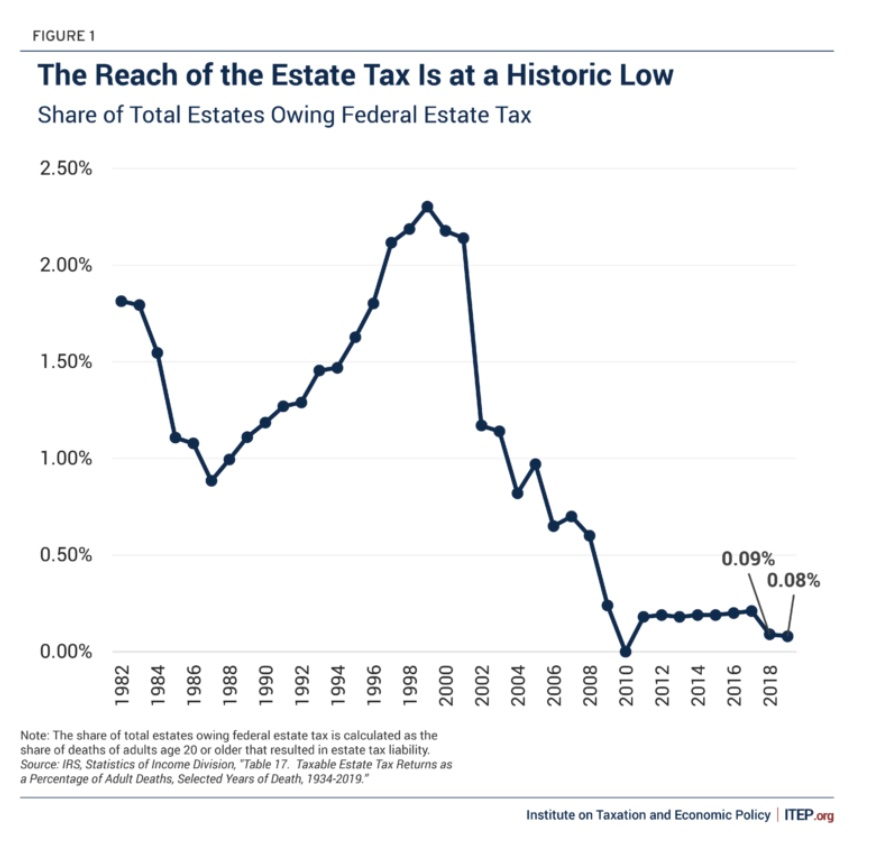
An important consideration in selecting the right estate planning strategy is the ability to retain flexibility. Changes in the estate tax exemption, such as that of the 2017 Tax Cuts and Jobs Act (TJCA) which more than doubled the exemption from $5.4 million in 2017 to $13.61 million in 2024, can dramatically change the approach used by estate planners. The TCJA reduced the reach of the federal estate tax to historic lows, with 2019 seeing only 8 of every 10,000 people who died with an estate large enough to trigger the tax according to the Institute on Taxation and Economic Policy. 


Line graph chart titled “What Are Trusts & Do I Need One?”


In summary, as you work with your advisors on your estate plan keep in mind that the political and legislative environment can make appropriate strategies a moving target. Revisit your plan every 3-5 years or when a significant change in law or life happens. Remember, the best estate plans will have flexibility built-in, accounting for the current tax and legal environment, and be designed to achieve your legacy goals.  


Logo for Boyce & Associates Wealth Consulting with
By Eric Boyce December 22, 2025
This week, CEO Eric Boyce, CFA discusses: 1. inflation lower than expected as government data releases get back to normal following shutdown 2. regional Fed districts report mixed manufacturing activity and new orders heading into the new year 3. demographic data and its impact on future economic trends, declining number of families with children under 18 and net immigration 4. data on the housing market, affordability etc. 5. power generation demand will drive investment in the next 5-10 years 6. commodity update - oil market soft, but potential upside; copper, food basket increases 7. investor sentiment remains high, cash balances low, risk appetite is "on". 8. important role and historical impact of dividends and dividend paying stocks on overall performance and risk 9. international investments outperforming domestic; gold prices correlated with increased uncertainty and high yield correlated to crypto
Logo for Boyce & Associates Wealth Consulting with
By Eric Boyce December 15, 2025
This week, CEO Eric Boyce, CFA discusses: 1. estimates heading into 2026 call for 8.7% stock growth off 12-14% earnings growth - estimates are a guide but a by no means an absolute 2. Fed cuts rates for the last time in 2025, what are the implications 3. the nuts and bolts behind the K-shaped economy for consumers, investors, businesses etc. 4. reasons behind recent improvement in trade; downtrend in employment costs 5. international equity outlook positive for 2026, risk appetite higher in all global markets 6. Mag 7 not uniformly beating the broader index; some improvements in breadth 7. yield curve positive, but longer term rates are higher than when the Fed began cutting short term rates. May see more volatility in bonds in 2026 8. commodity trends mixed; crude/distillate stocks lower, implying higher prices ahead
Logo for Boyce & Associates Wealth Consulting. Text reads
By Eric Boyce December 10, 2025
This week, CEO Eric Boyce, CFA discusses: 1. So-called "hard" economic data looking much better than "soft" data, fueling increased confidence, optimism, earnings estimate increases and market outlook for 2026 2. earnings and economic growth expected across global markets, as output remains mostly steady and public market valuations not too far from historical averages 3. US service sector remains in growth territory; production slightly positive, although capacity utilization remains depressed 4. apartment rents down, helping to hold inflation lower; multi-family vacancies rising. Single family transaction cancellations are on the rise. 5. labor market softness illustrated, highlighted by small business contraction 6. investor sentiment higher, leading to more of a "risk-on" environment 7. credit defaults looking better, leading to recompression of credit spreads in the market 8. treasury issuance spiking, which is helping to hold interest rates higher then they would otherwise likely be
By Eric Boyce December 1, 2025
This week, CEO Eric Boyce, CFA discusses: 1. 3rd quarter GDP looking close to 4% annualized; retails sales setting up positive 4th quarter 2025 growth scenario 2. probability of rate cut this next month increased based on recent Fed speakers and weaker labor data; regional data is mixed, but overall data has a positive bias 3. sentiment lower overall, and dragged down by lower incomes; creates some ambiguity over first quarter 2026 economic growth prospects 4. house price growth stalling; pending home sales showing some signs of life 5. market breadth discussion - Mag 7 versus the rest of the index; growth versus value, large versus small could be at an inflection point(?) 6. Potential signals from increased insider selling; however, increased foreign investment in US markets 7. yield curve discussion; some of the reason behind gold's rise 8. commodity markets settling down; crude oil futures lower
By Lindsey Sharpe December 1, 2025
As 2025 winds down, it’s a great time to review your financial strategy. Many tax-advantaged opportunities expire on December 31, so acting now can put you in a stronger position for 2025. Always consult your CPA or financial advisor before making any changes. 1. Max Out IRA Contributions (Including Backdoor Roths) For 2025, the IRA contribution limit is $7,000 (under 50) or $8,000 (50+). Roth contributions phase out for singles with MAGI $150,000–$165,000 and joint filers $236,000–$246,000. If your income exceeds these limits, a backdoor Roth contribution may be an option. Pre-tax IRA balances can trigger partial taxation under the pro-rata rule. 2. Roth Conversions Move money from a Traditional IRA or pre-tax retirement account into a Roth IRA. Taxes are paid now, but future growth and withdrawals are tax-free. Year-end is ideal if your income is lower, you experienced job changes, or you want to reduce taxes for heirs. Converting an employer plan account or Traditional IRA to a Roth IRA is a taxable event. Increased taxable income from the Roth IRA conversion may have several consequences including but not limited to, a need for additional tax withholding or estimated tax payments, the loss of certain tax deductions and credits, and higher taxes on Social Security benefits and higher Medicare premiums. Be sure to consult with a qualified tax advisor before making any decisions regarding your IR A. 3. Required Minimum Distributions (RMDs) If you are 73 or older, you must take RMDs from most retirement accounts, including Traditional IRAs and 401(k)s. Failing to take an RMD in 2025 results in a 25% excise tax. RMDs are calculated using your prior year-end balance, age, and IRS Life Expectancy Factor. Inherited IRAs also require RMDs, which can be complex—consult an advisor. 4. Tax-Loss Harvesting Selling investments at a loss in taxable accounts can offset gains and reduce taxable income, with up to $3,000 deductible against ordinary income. Current clients: We routinely implement tax-loss harvesting at year-end. Tax-loss harvesting is a strategy of selling securities at a loss to offset a capital gains tax liability. It is typically used to limit the recognition of short-term capital gains, which are normally taxed at higher federal income tax rates than long-term capital gains, though it is also used for long-term capital gains. 5. Charitable Giving, QCDs & DAFs Donations made by December 31 may be deductible if you itemize. If you’re 70½+, a Qualified Charitable Distribution (QCD) can satisfy all or part of an RMD and reduce taxable income. A Donor-Advised Fund (DAF) allows contributions this year with an immediate tax deduction, while you recommend grants over time. Funds grow in the account, offering flexibility for strategic giving. With thoughtful planning, year-end is a chance to reduce taxes, meet retirement obligations, and start 2026 financially prepared. We are available to answer any questions. Happy holidays from all of us at Boyce & Associates Wealth Consulting!
Boyce & Associates Wealth Consulting logo. Title: Letters From Eric, December 2025. Topic: Year-end 2025 resilience and 2026 outlook.
By Eric Boyce December 1, 2025
AI-driven gains, a November pullback, and two Fed cuts with core inflation near 3%. 2026 outlook: cautious growth, quality bonds for ballast, tariff/Fed risks.
By Eric Boyce November 24, 2025
This week, CEO Eric Boyce, CFA discusses: 1. sales growth heading into holiday shopping season; economic indicators looking at +4% annual economic growth coming out of the 3rd quarter 2. factory orders positive but not "strong"; labor market weakness outside of leisure, hospitality, education and healthcare 3. new home prices now below existing home prices due to inventory shortages, high % of mortgages still below 4%, builder incentives 4. financial conditions "looser"; Philly Fed/Kansas City Fed report softer new orders, but perhaps some optimism on the margin 5. delinquency rates picking up in commercial office, as vacancies continue to rise 6. consumer credit indicators holding somewhat steady, except for credit card delinquencies 7. market correction underway in tech stocks; overall volatility is back on the table (especially for many of the Mag 7 and bitcoin) 8. consumer discretionary outperforming staples; equal weighted S&P 500 at a historic lag to capitalization weights 9. cattle, cotton, cocoa prices in decline. offset by corn, soybeans
Person analyzing financial charts with a pen and laptop, text reads
By Boyce & Associates November 21, 2025
Explore five common investment styles and learn how to choose the one that best aligns with your goals, risk tolerance, and level of involvement.
By Eric Boyce November 17, 2025
This week, CEO Eric Boyce, CFA discusses: 1. small business and corporate sentiment appears favorable; capital spending trends and expected pricing power looking better 2. some stress in the credit markets, especially student loans; bankruptcies higher 3. evidence of K-shaped economy - healthcare premiums, groceries, lower wage growth 4. global and US valuations are indeed stretched, although this is not your father's S&P 500 - concentration of technology makes some historical comparisons difficult. Most consecutive days of the S&P 500 trading above its 50 day moving average since 2008 5. stocks fueled by liquidity, better than expected earnings performance and higher sustained profit margins 6. volatility still relatively low, but risk of increased volatility is prevalent 7. growth stocks outperforming value, large outperforming small; international returns expected be higher than US looking out 10 years, per Goldman
Graduates throwing caps in the air; title:
By Boyce & Associates November 14, 2025
Learn five smart college planning strategies to help you save effectively for your child’s education, without overwhelming your budget or long-term goals.
Show More